Solutions

Connected enterprise

A site configured differently is a site nobody can troubleshoot remotely.

Divisions assembled
Networks and communicationsSoftware and systems

The issue

What costs in a branch network is not bandwidth, it is heterogeneity.

A distributed organisation accumulates installations built at different times, by different providers, with overlapping addressing and equipment whose configuration nobody holds. Every incident then begins with identification work.

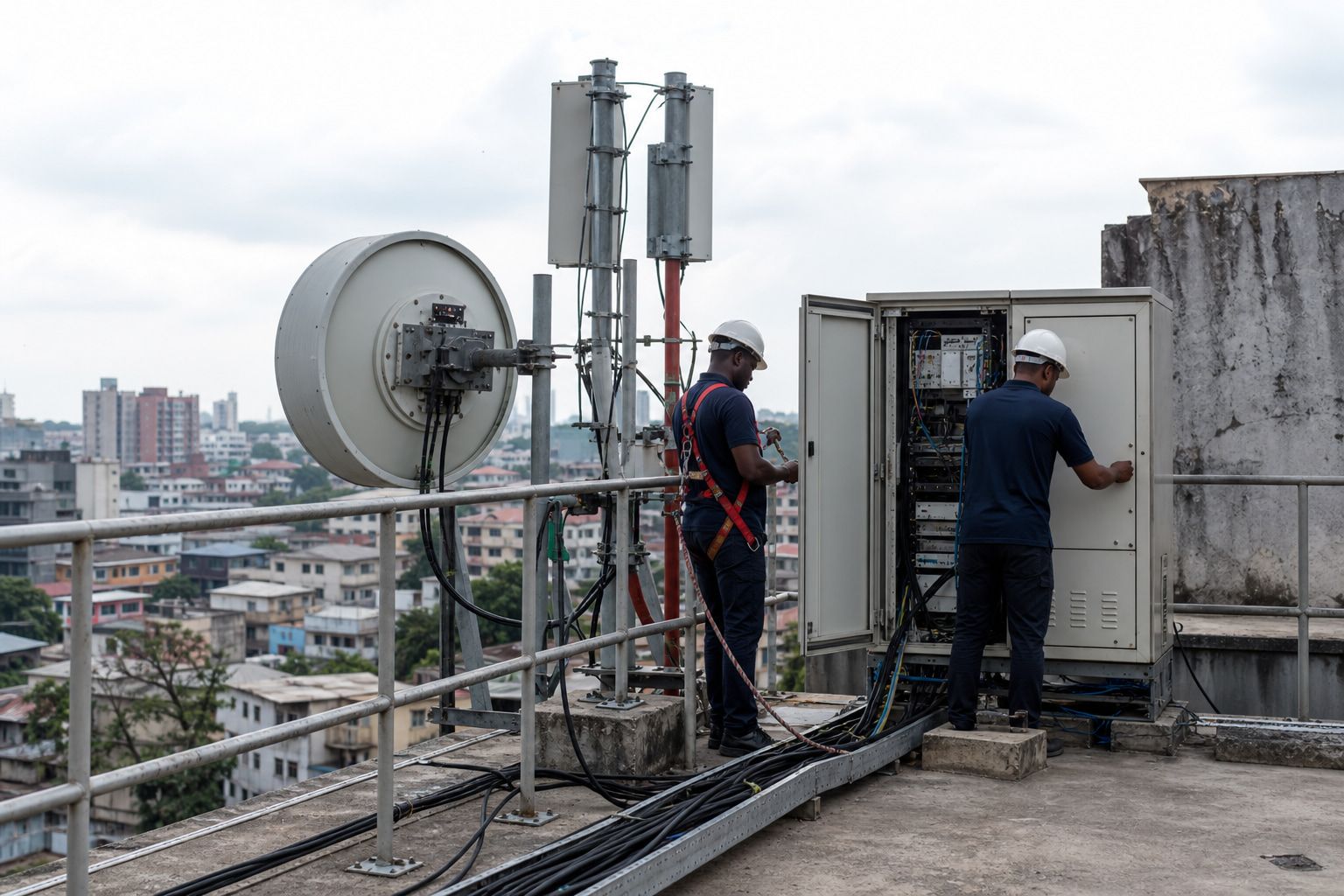
The consequence is paid in travel. A fault that takes ten minutes to correct remotely takes two days when someone has to be sent, and the real cost of a heterogeneous network shows in travel expenses rather than in the equipment invoice.

Telephony adds a requirement of its own: it is the only service whose every defect is observed by someone outside the organisation — a citizen, a supplier, an administration — which makes a migration politically riskier than it is technically difficult.
What brings down the cost of a distributed estate, schematic

01Survey of what exists
Site by site, with configuration drift. With no addressing plan, every change is a wager.
02Standard configuration
Written on a real site, not in a document.
03Pilot site
Reworked in full, it becomes the reference the others are compared against.
04Replication
Site by site. A site configured differently is a site nobody can troubleshoot remotely.
05Numbering plan
One across every site, published numbers retained, internal calls off the public network.
06Coexistence then cutover
Never simultaneous: that leaves neither a reference site nor a credible rollback.
Schematic. The accented path is what turns a heterogeneous estate into one that can be operated remotely.The numbering plan follows ITU-T recommendation E.164. No other marker on this schematic is a measurement.

Outcome

What you get

An estate whose configurations are identical and backed up, whose every site stays usable when its link fails, and whose in-house team can create a handset, open an access and read a diagram without going through the provider.

Scope

What the solution includes

Survey and addressing plan
Inventory of sites, equipment and configurations in service, a single addressing plan, and physical labelling of links and racks.
Site network
Copper and fibre cabling accepted by measurement, redundant switching, segmentation between office, security, industrial, voice and guest, and wireless access verified on site.
Interconnection
Carrier links and fallback paths on a different technology, proven automatic failover, and prioritisation of critical flows on the fallback link.
Telephony
One numbering plan across sites, published numbers retained, site survivability when the link breaks, and emergency call routing carrying the exact location.
Industrialisation
Standard configurations replicated, automated handset provisioning, configuration backups, and a restoration procedure for replaced equipment.
Remote operation
Monitoring of links and devices, remote access traced under named accounts, and documentation and diagrams kept current in an editable format.

Sequence

How it is run

  1. 01

    Survey

    The real state of the estate, site by site, with configuration drift. With no addressing plan and no current diagram, every change is a wager, so the survey is the first expenditure.

  2. 02

    Pilot site

    One site is reworked in full and becomes the reference. Standard configurations are written on that site, not in a document.

  3. 03

    Roll-out

    Replication site by site, with a coexistence period for telephony. No simultaneous cutover: it leaves neither a reference site nor a credible rollback.

  4. 04

    Handover

    Training for the in-house team, full access to the equipment with no account reserved to the provider, and handover of configurations and diagrams.

Commitments

What is verified at acceptance

These commitments can be held against us. Written into a tender, they filter out the responses that will not hold — including ours, if it does not hold them.

  • An addressing plan and current diagrams, handed over at completion in a format the client can edit.
  • Cabling acceptance measurements, link by link, handed over rather than summarised in a certificate.
  • The behaviour of each site on the loss of its link, described and proven at acceptance.
  • Emergency call routing and the location transmitted, verified handset by handset on every site.
  • No simultaneous telephony cutover across several sites, and a rollback procedure for each one.
  • No account reserved to the provider on the equipment delivered.
  • Configuration backups are accessible to the client and their restoration is proven.

Before committing

Questions to settle internally

An organisation that cannot answer these questions is not ready to launch the programme. Saying so is better than selling it a study.

  • How many simultaneous calls are actually observed at peak, rather than how many handsets are there?
  • Which numbers are published externally, including on printed material?
  • Which devices are not handsets — lifts, alarms, gates — and which lines are they on?
  • What must keep working on a site whose link is cut?
  • Who, in house, must be able to create and remove a handset without calling us?
  • Are the switches that feed the handsets backed up?

Evidence

What we have delivered on this scope

  • Telecommunications2023

    Regional operator — core network modernisation

    Replacement of the core network and backup power at fourteen points of presence, with no commercial service outage.

    Points of presence migrated
    14
    Longest outage window observed
    4 min

    Reference KP-2023-021

All projects

Consultations · Pre-qualifications · Partnerships

Let us discuss the actual scope.

Describe the site, the dominant constraint and the deadline. We will say what requires a preliminary study and what can be committed directly.