Solutions

Critical infrastructure

The availability of a base is measured at the outage, not at acceptance.

Divisions assembled
Secure buildingsPower and backup supplyNetworks and communicationsSoftware and systems

The issue

Every component is available; it is their assembly that is not.

A technical room, a UPS, a generator set and two carrier links can all work and still let the site stop. The cause is almost always a link nobody owned: cooling that is not backed up, two links sharing one duct, or the board feeding the rack without passing through the UPS.

The second factor is time. Battery autonomy must exceed the generator’s starting and transfer time, with a margin for ageing. That gap appears on no datasheet: it is measured by test, once the installation is in place.

The third is operation. A well-designed base that is never exercised decays in silence — aged batteries, water in the fuel, a thermal threshold reached at the back of the room — and the first real outage is also the first test.

Available components, an assembly to be proven, schematic

01Technical room
Capacity in power per rack and heat removed, never in square metres.
02Backed-up power
UPS, replacement source, transfer, labelled distribution.
03Backed-up cooling
Backed up alongside the IT load. It is the link an assembly most often forgets.
04Redundant links
A fallback path on another technology and another route. Two links in one duct fail together.
05End-to-end test
On load, from grid to generator. Two components tested separately do not prove their transfer.
06Monitoring and register
Margins measured, recorded, and degradation visible before the incident.
Schematic. Every component can be available and the whole still stop: the accented path shows where.Typical sizing figures. Redundancy and the temperature range are targets; the end-to-end test is what verifies them, and nothing else does.

Outcome

What you get

A base whose behaviour at the outage is known because it has been measured, whose real margin is recorded, and whose degradation is visible before the incident rather than after it.

Scope

What the solution includes

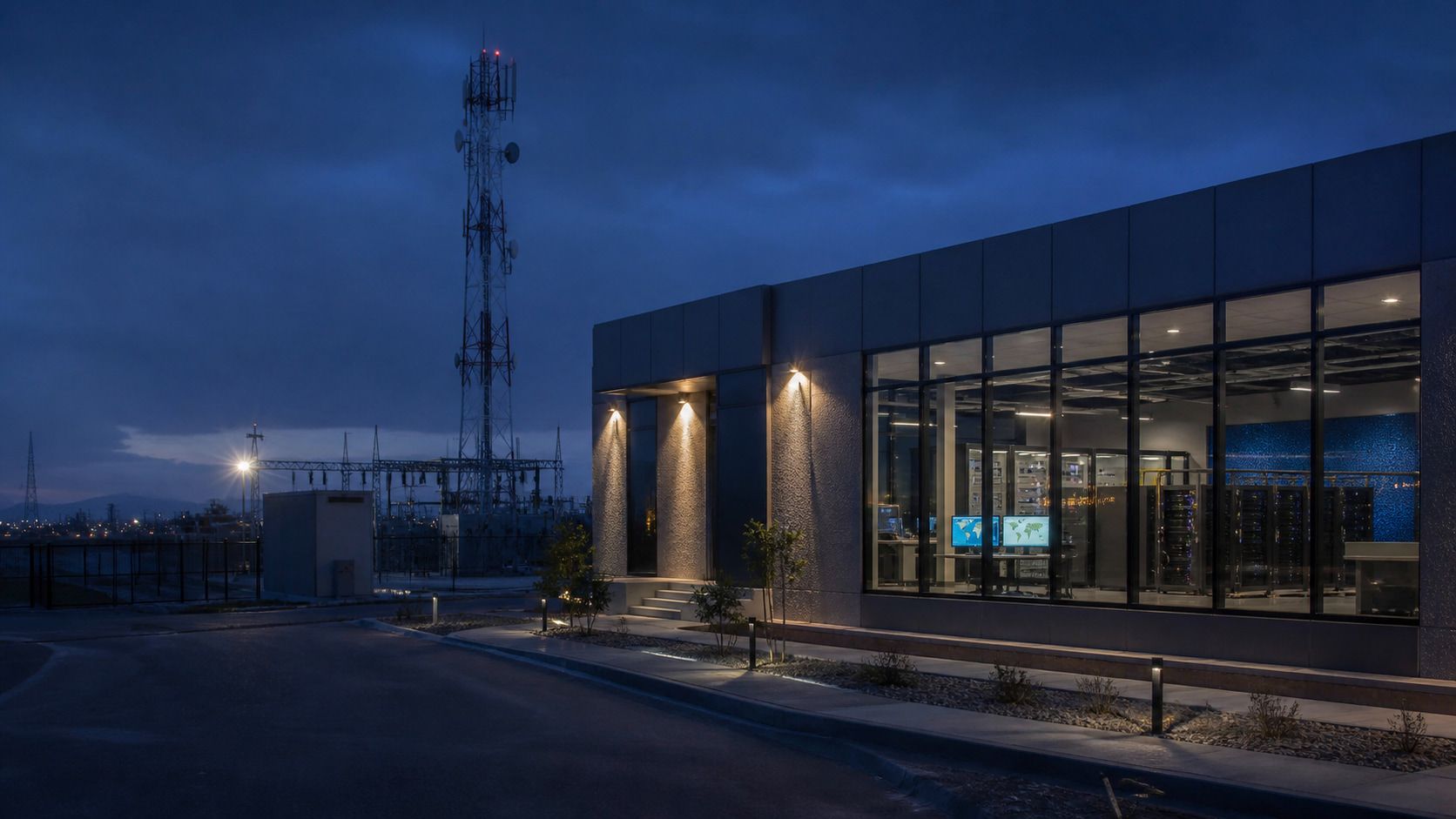
Technical room
Sizing in power per rack and heat removal capacity, aisle treatment, layout, floor loading, cable routes, named access control and fire detection.
Power
Load study, uninterruptible supply with maintenance bypass, generator set and source transfer, labelled backed-up distribution, per-circuit consumption metering.
Links
Redundant network core, fallback paths on a different technology and a different route, proven automatic failover, and prioritisation of critical flows on the fallback link.
Cooling
Unit redundancy, cooling backed up alongside the IT load, temperature measured per zone, and water leak detection.
Base monitoring
Power status, fuel level, battery health, temperature, links and backups; few alerts, each tied to a written action and a person.
Test programme
On-load transfer tests, discharge tests, timed restorations, each recorded with its result and the drift since the previous one.

Sequence

How it is run

  1. 01

    Baseline survey

    Thermal survey under load, power balance per circuit, and examination of link paths and their real independence. This survey precedes any equipment decision.

  2. 02

    Architecture

    Redundancy chosen component by component, from the acceptable downtime settled with the executive rather than with the technical team alone.

  3. 03

    Delivery

    Works carried out while keeping the service running, with agreed windows, identified points of no return, and a written rollback procedure for each transfer.

  4. 04

    Proof and operation

    The complete chain tested on load, from grid to generator. Then the periodic test programme and the monitoring that makes it verifiable remotely.

Commitments

What is verified at acceptance

These commitments can be held against us. Written into a tender, they filter out the responses that will not hold — including ours, if it does not hold them.

  • Acceptable downtime and maximum data loss are settled with the executive, in writing, before any design.
  • The complete chain is tested on load, from grid to generator set, and the result is handed over.
  • Cooling is backed up alongside the IT load, or the gap is stated explicitly as an accepted limit.
  • Fallback paths share neither the technology nor the route of the main path, or the exception is justified in writing.
  • Measured margins — real autonomy, temperature at the back of the room, power available per rack — are recorded as the initial state.
  • The addressing plan, diagrams and configuration backups are handed over in an editable format.
  • A periodic test programme is established, with its interval and its register.

Before committing

Questions to settle internally

An organisation that cannot answer these questions is not ready to launch the programme. Saying so is better than selling it a study.

  • How long can the organisation stay down, and how much data can it lose?
  • What does the site do when the grid fails, and for how long?
  • Do the two carrier links run through the same duct?
  • When was the last restoration tested, and how long did it take?
  • Who is called at night, and by what path do they intervene remotely?
  • Is the cooling fed from the same source as the servers?

Evidence

What we have delivered on this scope

  • Energy and critical infrastructure2024

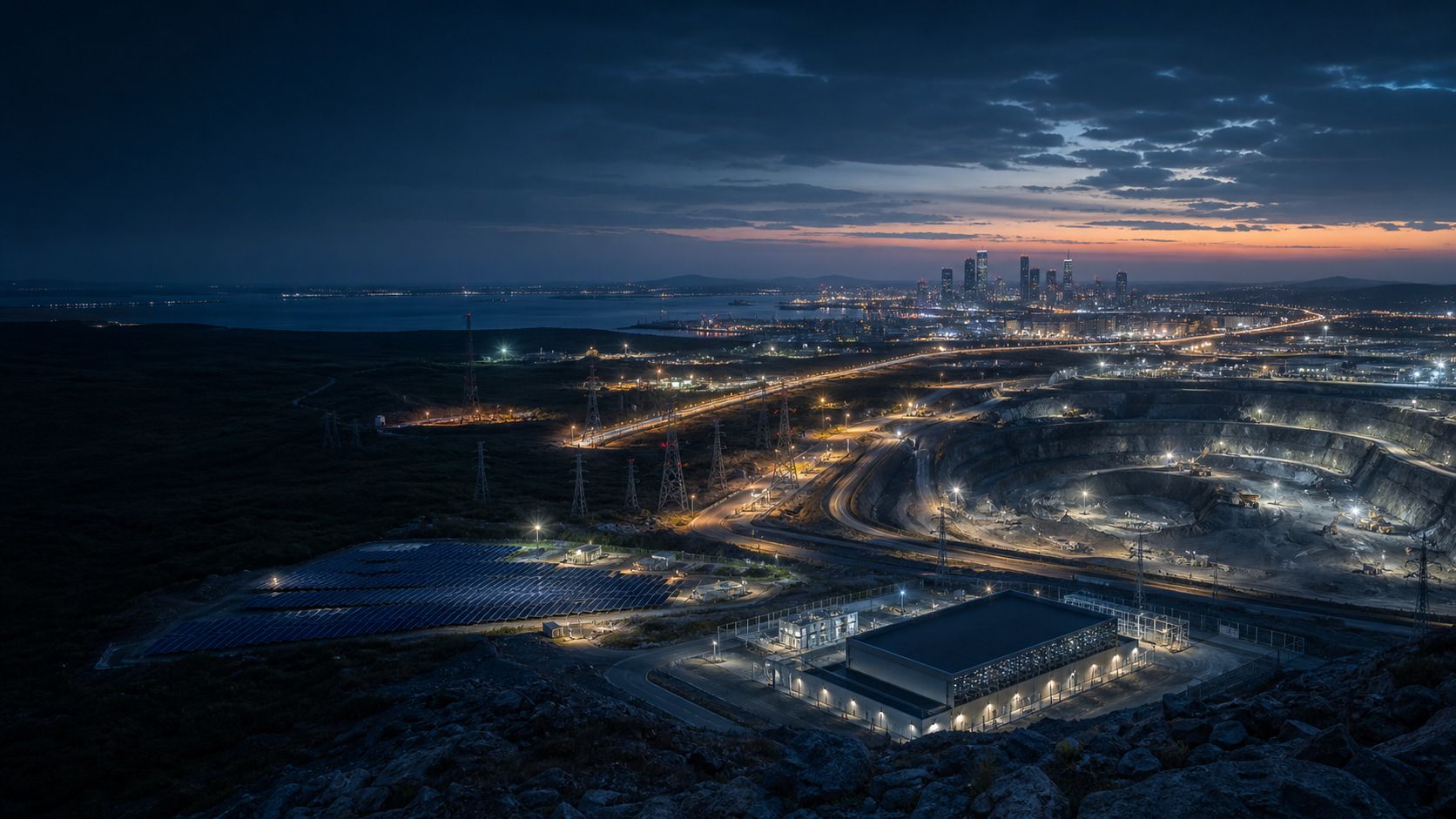
    Mining site — server room and backup power

    Construction of a secure technical room and its power chain, on an isolated site with no reliable public grid.

    Weeks of measurement before sizing
    4
    Load tests per year
    12

    Reference KP-2024-008

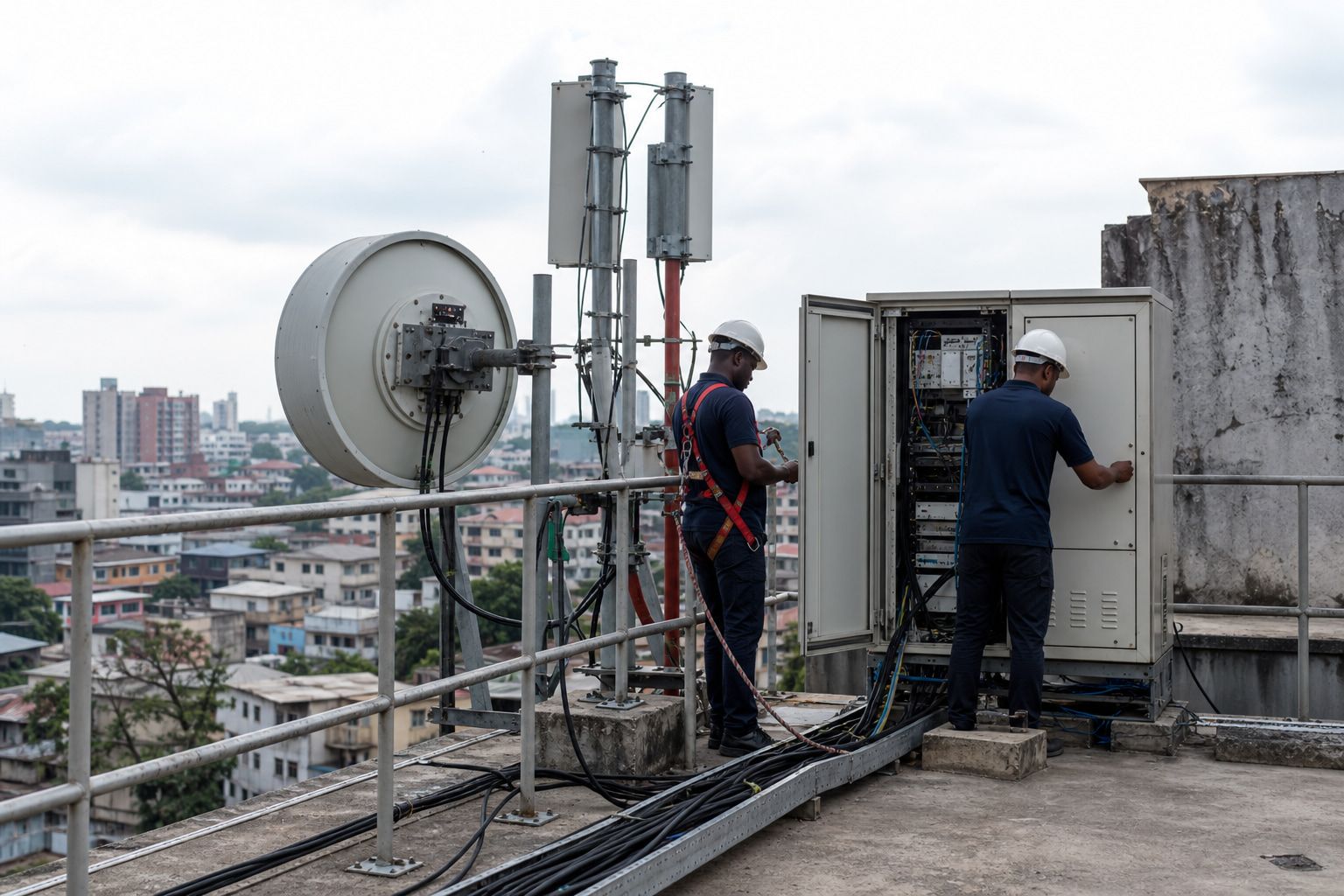
  • Telecommunications2023

    Regional operator — core network modernisation

    Replacement of the core network and backup power at fourteen points of presence, with no commercial service outage.

    Points of presence migrated
    14
    Longest outage window observed
    4 min

    Reference KP-2023-021

All projects

Consultations · Pre-qualifications · Partnerships

Let us discuss the actual scope.

Describe the site, the dominant constraint and the deadline. We will say what requires a preliminary study and what can be committed directly.