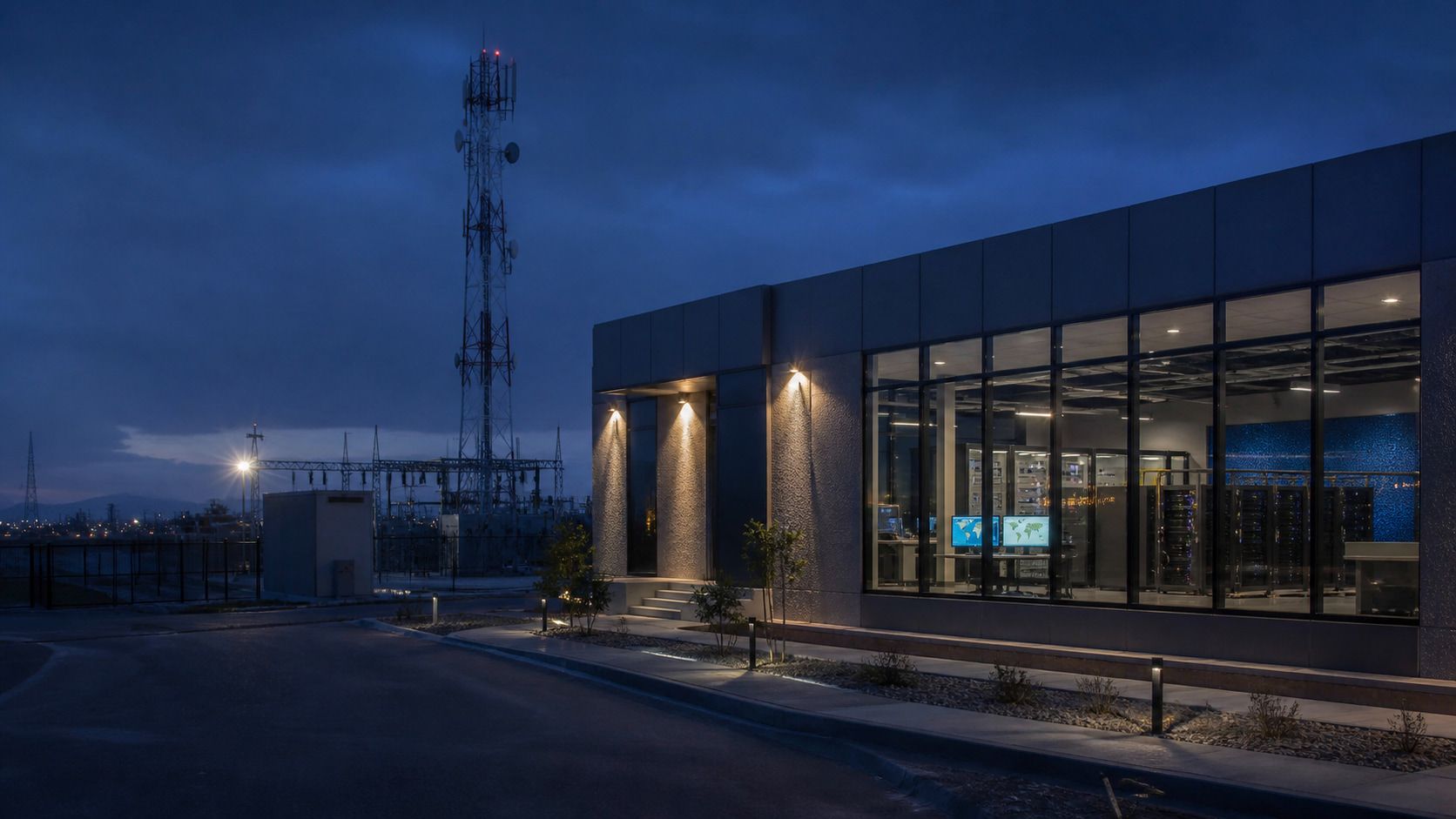
Branch network — interconnection and enterprise telephony
Twenty-two branches linked to head office, with unified telephony, backup paths and common supervision.
- Branches interconnected
- 22
- Branches on duplicated links
- 8
Reference KP-2024-019
A telephony migration is judged on the first inbound call that fails to connect.
The problem
Slow email is noticed internally. A call that does not connect is noticed by the citizen, the supplier or the ministry that was calling. That is what makes a telephony migration politically riskier than it is technically difficult.
The risk almost never comes from the software. It comes from a numbering plan carried over unchanged without anyone checking which numbers are actually published, from guard posts and emergency lines missing from the survey, and from the system’s behaviour when the carrier link goes down.
Well-designed telephony keeps working inside a site when the carrier link is cut, and still routes emergency calls. Both properties are decided in the architecture; added afterwards, they usually mean reworking the connection.
A telephony migration and its two breaking points, schematic
Scope
Situations
Requirements
These requirements hold whichever supplier is appointed. Written into a tender, they filter out the responses that will not hold.
Pitfalls
Questions
On-site hosting keeps internal telephony working with no external link, and suits organisations whose continuity cannot depend on a connection. A hosted service reduces the operating burden and suits multi-site organisations with reliable links. The deciding criterion is the expected behaviour when the link fails, not the monthly cost.
Keeping public numbers depends on the carrier and on the applicable rules; it is verified before the schedule is settled, not after. Internal numbering can always be kept, and almost always should be: a changed plan forces every directory, every sign and every habit to be reworked.
A single call needs little; what matters is the stability of the link and the number of simultaneous calls actually observed at peak. Sizing is done against that number, measured on the existing installation, and not against the number of handsets.
Handsets powered over the network go down with the switch that feeds them. Backed-up telephony therefore means backing up the access switches, the call server and the carrier gateway, for a duration settled at design stage. Otherwise telephony disappears at the moment it is most useful.
Through gateways, once they have been listed. Lifts, alarms and gates carry obligations of their own, and their line must stay usable independently of the rest. They are the most frequent cause of post-migration incidents, precisely because they appear in no directory.
Technically yes. Recording processes personal data and subjects the organisation to informing the parties beforehand, to a declared purpose, to a retention period and to a restricted access regime. It is put in place for a specific reason, over a defined scope, rather than by default across every handset.
Evidence
Twenty-two branches linked to head office, with unified telephony, backup paths and common supervision.
Reference KP-2024-019
Situations that lead here
Solutions concerned
Consultations · Pre-qualifications · Partnerships
Describe the site, the dominant constraint and the deadline. We will say what requires a preliminary study and what can be committed directly.
Results
No result.Try a broader word: power, security, network, pre-qualification.
↑↓ Move↵ Open pageEsc CloseAll pages