
Mining site — server room and backup power
Construction of a secure technical room and its power chain, on an isolated site with no reliable public grid.
- Weeks of measurement before sizing
- 4
- Load tests per year
- 12
Reference KP-2024-008
Monitoring is judged on alerts handled, not on alerts produced.
The problem
Monitoring always decays the same way. A tool is installed, the supplied templates are enabled, and the console produces hundreds of events a day. Nobody can handle them, the team learns to ignore the colour red, and the real failure passes unnoticed among ordinary alerts.
Useful monitoring watches few things, but things whose degradation is certain: disk space, backups, certificates, carrier links, temperature, power, queue depth. Every alert must correspond to a known written action, and to someone who performs it.
Managed services raise a separate question. Delegating operations is legitimate; losing the ability to take them back is not. What separates the two is written in the contract: traceability of the provider’s access, named accounts, maintained documentation, and exit terms.
What separates an alert from an indicator, schematic
Scope
Situations
Requirements
These requirements hold whichever supplier is appointed. Written into a tender, they filter out the responses that will not hold.
Pitfalls
Questions
What degrades with certainty and takes effect immediately: disk space, backup success, certificate expiry, carrier link status, temperature in technical rooms, and the state of backed-up power. Those few indicators cover most of the outages actually observed, for a modest setup effort.
Far fewer than assumed. A good rule is that an alert must be rare enough to be surprising. If a team sees the same alert every week without acting, it is not an alert but a badly placed indicator, and it belongs out of the console.
An acknowledgement time and a restoration time, kept distinct, by severity, with the hours covered and how the incident is timestamped. A single global commitment cannot be verified. It must also be clear what happens when it is missed, otherwise it commits nobody.
Through four requirements: named accounts for the provider’s staff, logging of their access, operating documentation handed over periodically, and client access to its own backups. They cost a serious provider nothing and make leaving possible.
It is justified when interrupting a service outside working hours carries a real cost. It presupposes named people, a call procedure that works at night, and remote intervention means that have been exercised. On-call cover without working remote access is only a telephone number.
A current inventory, operating documentation, configurations, backups in a format readable without the provider’s tools, administration accounts and a transfer schedule. Without a schedule, handback stretches out to the date when nobody is available to perform it.
Evidence
Construction of a secure technical room and its power chain, on an isolated site with no reliable public grid.
Reference KP-2024-008
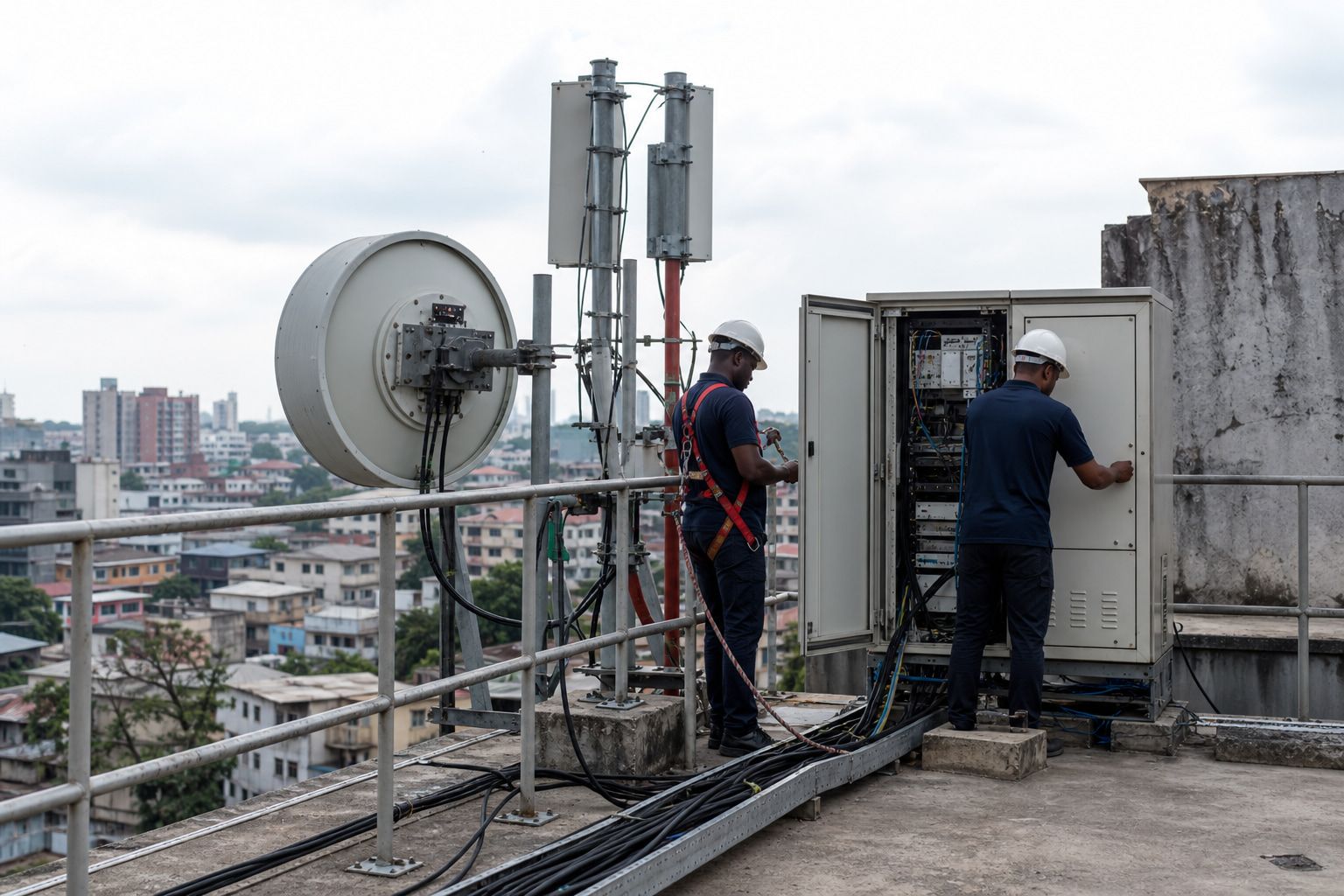
Replacement of the core network and backup power at fourteen points of presence, with no commercial service outage.
Reference KP-2023-021

Complete overhaul of access control, video surveillance and backup power for a chancery in service.
Reference KP-2022-014

A single control room for six sites whose security systems did not talk to each other.
Reference KP-2025-002
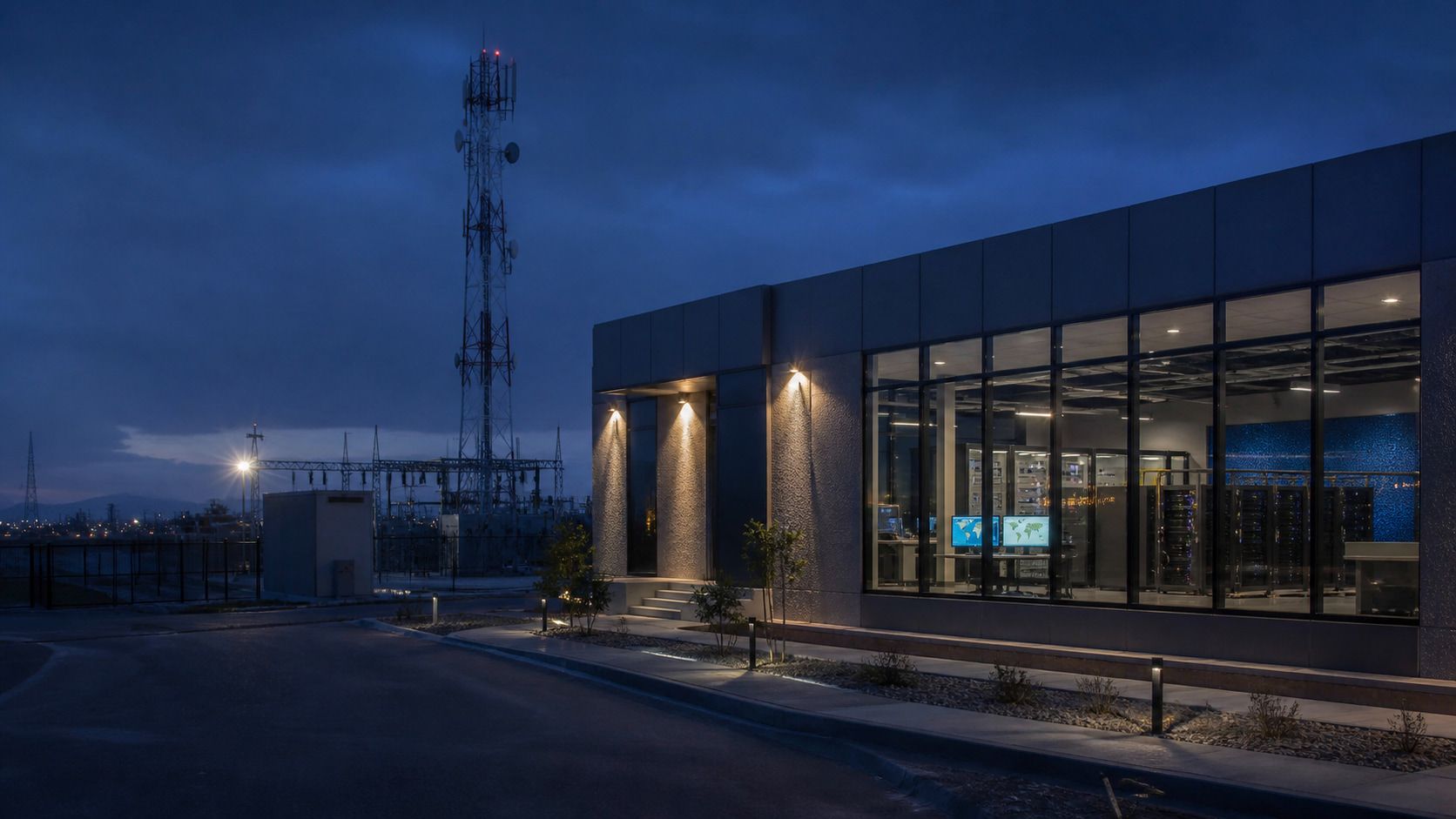
Twenty-two branches linked to head office, with unified telephony, backup paths and common supervision.
Reference KP-2024-019
Situations that lead here
Solutions concerned
Consultations · Pre-qualifications · Partnerships
Describe the site, the dominant constraint and the deadline. We will say what requires a preliminary study and what can be committed directly.
Results
No result.Try a broader word: power, security, network, pre-qualification.
↑↓ Move↵ Open pageEsc CloseAll pages